Renter Mode
and the trace someone else has to live with
Some people do not just rent things. They relate to consequences as if they are already gone.
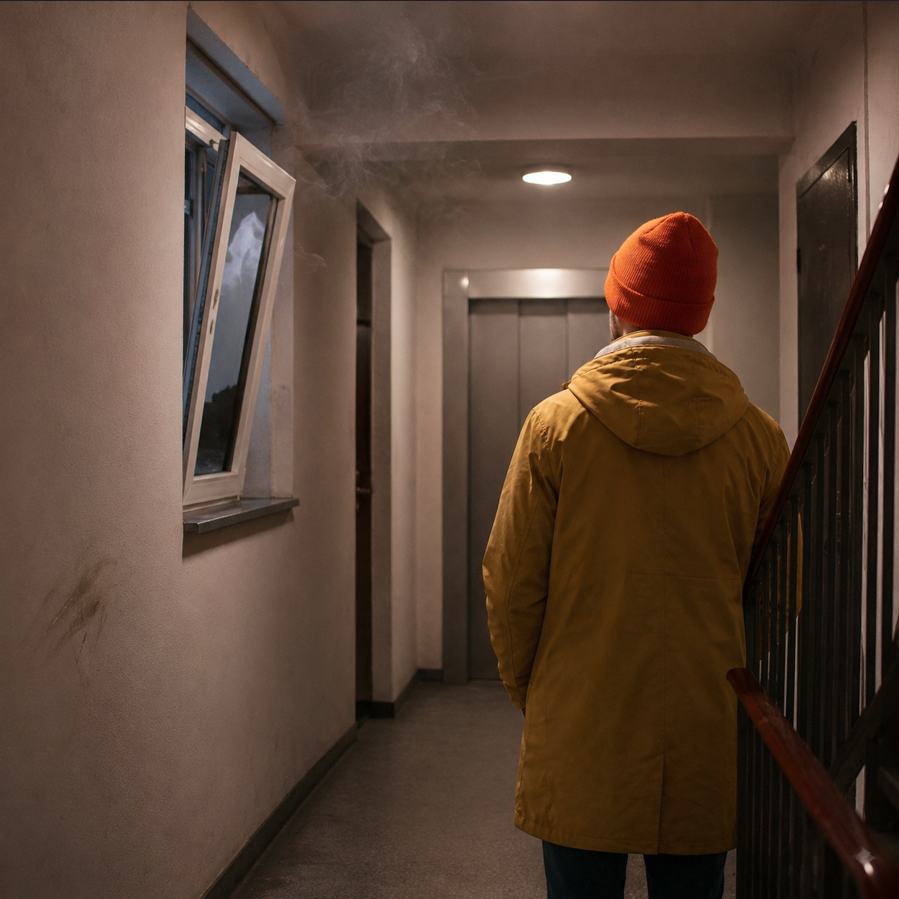
Yesterday I walked into my building and smelled cigarette smoke.
Not anger.
Surprise.
This building does not smell like this.
I stood there for a moment. The smell was not dramatic. It was not smoke from a fire. It was not an emergency.
But it was foreign.
A small signal inside a space that usually has a different atmosphere.
Recently I had seen a few new families in the building. I have not met them yet. But I met this first.
The smell.
And almost immediately I thought: this is probably someone who does not feel this house as theirs.
Not necessarily because they are evil. Not even necessarily because they are stupid.
Because they are temporary.
They are here now. In half a year, or in a year, they may be gone. The smell will not stay with them. The broken thing will not stay with them. The mood they bring into the building will not follow them in the same way.
And then something strange happened.
I became calm.
The smell will pass. If the lift breaks, it will be repaired. If the wall is marked, someone will clean it. If a window is forced open, it will be fixed.
The person will probably move on.
The building will remain.
I have seen this pattern for years.
In carsharing cars, people leave trash, dirt, bottles, wrappers, the remains of their drive. I sit down after them and wonder whether their own car would look the same.
Maybe yes.
Maybe this is simply their normal level of life.
But sometimes it feels different. Sometimes it feels like the person understands very well that this is not theirs. And because it is not theirs, the usual restraint disappears.
A rental car is not a car. It is a short interval.
A hallway is not a home. It is a passage.
A lift is not part of the place where they live. It is a tool they pass through.
The object still exists after them.
But internally, they have already left.
That is the renter mode.
Not renting as a contract.
Many people rent and still care for a place better than owners do.
This is not about the contract.
It is about the relationship to consequences.
The person leaves the trace, but does not stay with the trace.
This is why the small things matter. A cigarette smell in the hallway. A dog puddle in the elevator. A broken lift after someone moved something carelessly. A wall with marks. A car full of trash.
None of these things is large enough to become a tragedy.
But each of them says something about the relationship between a person and a place.
Some people behave differently when they feel the future.
If I own the car, I sit inside my own consequences.
If I live in the building for years, I walk through the same hallway tomorrow.
If I know my children will use this lift, I feel the damage differently.
Not because owners are morally perfect. They are not.
But continuity changes behavior.
When the future is felt, small things become part of life.
When the future is absent, small things become someone else's problem.
I think the same thing happens in companies.
A person who has already mentally left can still be sitting at the desk. A contractor can touch a system without feeling the system's future. A manager can make a decision whose consequences arrive after he is gone.
The behavior changes.
Documentation is left half done. Files are placed somewhere temporary. A client is promised something that someone else will have to explain. A process is bent for convenience, and the next person inherits the bend.
No one calls it damage.
It is too small.
But it is the same pattern.
Not my car.
Not my house.
Not my company.
Not my problem after I leave.
The most dangerous part is not that some people rent apartments, cars, tools, or roles.
The dangerous part is when temporary use becomes a permanent way of living.
A person can begin to move through everything like a renter.
Through houses.
Through work.
Through relationships.
Through shared spaces.
Through responsibilities.
Always using.
Rarely belonging.
Rarely staying with the trace.
I do not think the answer is to become angry every time.
That would give temporary people too much permanent space inside me.
The smell in the hallway will be gone by tomorrow.
The lift will be repaired.
The wall can be cleaned.
And the person who created the problem may disappear from the life of the house sooner than the house disappears from mine.
Maybe this is the only mature position I have found so far.
To see it clearly.
To not pretend it is normal.
To fix what can be fixed.
And not let a temporary person become the permanent atmosphere of the place.