The Hanger
and the Task That Did Not Come Back
An overpayment can buy something the receipt never shows: the removal of a task from the future backlog.
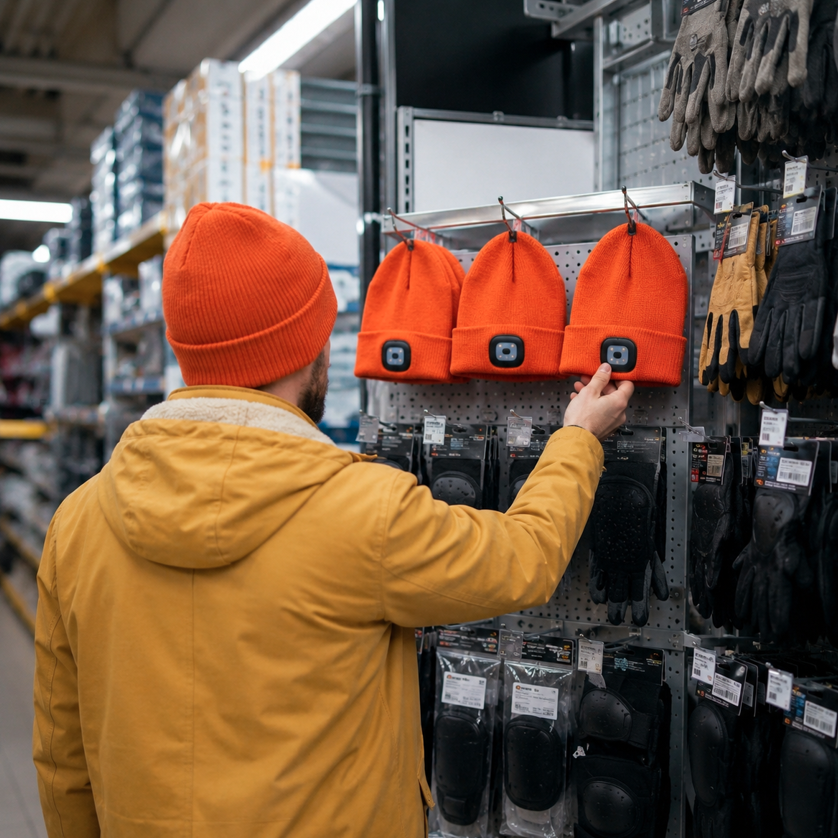
Summer. Stokker on Krasta street in Riga. On a hanger between work gloves and knee pads: three orange winter beanies. Each one with a small USB flashlight built into the fold.
I stopped.
I had been looking for this beanie for several weeks. The old one was worn out. It cost around six euro when I bought it. K-Senukai still had the model, but only in black. The Latvian online stores had moved on with the season. Nobody stocks winter hats in summer.
So the search stayed open.
My normal way of buying anything is slow. Compare. Study. Check the price. Look at alternatives. Think again. Postpone. Return. Compare again. This can run for weeks. It usually does. It feels responsible. It feels like the correct way to spend money.
And it has a cost that never appears on any receipt.
Because the beanie was not a beanie anymore. It was a task. One small card in a backlog that holds hundreds of them, personal and professional, all open at the same time. Find it. Check availability. Decide if the price is normal. Come back later. Look once more. Every step small. Every step occupying a slot in the head.
The hanger ended that.
Here is the beanie. Here is the price. Eleven, maybe twelve euro. Almost double the old one. Yes or no.
I took two.
Not because two heads. Because I knew this card. I knew it would reopen in a few months when the first one wears out, and I did not want to meet it again. The second beanie was not a purchase. It was insurance against the search restarting.
From the outside this looks like an impulse purchase. The classic anti-pattern. Saw it, grabbed it, paid double, took a spare. Everything my normal process exists to prevent.
But it was not an impulse. It was the opposite. An impulse purchase is supposed to start where a person thought too little. This one started where I had been thinking too long.
In the car I noticed what had actually changed. The task was gone. Not postponed. Not moved to next week. Gone. No tab left open in the head, no quiet reminder to check one more store, no price waiting to be compared. The card was closed and it did not come back.
That is what the extra five euro bought.
Not the beanie. The beanie I could have found cheaper, eventually, somewhere, with enough searching. What I bought was the energy I would have spent on that searching. Energy I would have paid out in small installments, week after week, from a budget that has ninety-nine other tasks standing in line.
I bought future energy.
Frugality has a clean reputation. Spend less, win. But the cheap path usually carries a hidden process. Search, drive, check, wait, pick up, verify, remember. The expensive path sometimes carries something else: the absence of that process. The price already includes not thinking about it again.
For one beanie this is small. Five euro against a few hours of distributed attention. But nobody carries one beanie. A person carries hundreds of open cards at once. The broken thing waiting for the right spare part. The subscription that should be reviewed. The gift that should be compared across three shops. Each one small. Each one reopening on its own schedule, asking for one more look.
At some point the question stops being what the thing costs.
The question becomes: what does it cost to never return to this again?
That number is not on the price tag. But it is the one I paid. And it is the best five euro I spent that summer.