The Locks
and the Math They Really Protect
Security is not about making something unbreakable. It is about making it expensive enough that most people will not bother.
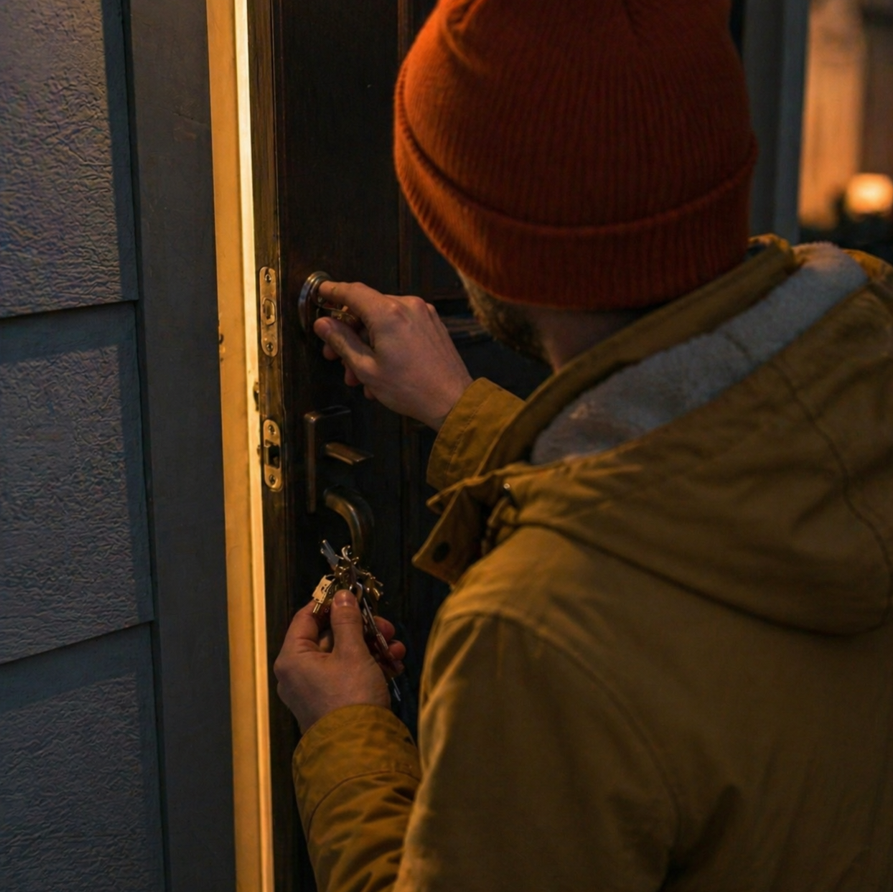
I was setting the alarm system. Closing each lock. Going through the routine.
It takes time.
Mid-ritual, a thought arrived: there are people who could open all of these in seconds. Not hypothetically. Really. People with skill, tools, practice.
The absurdity was immediate.
I was investing time in something fragile. Someone with the right knowledge could undo everything I was doing, faster than I was doing it.
But then the counter-thought: most people don't have that skill.
And that is when the acceptance settled in.
The lock does not make the door unbreakable. It makes breaking in expensive. Not impossible. Just expensive enough that most people will not bother.
The security is not in the metal. It is in the math.
Most attackers are not experts. Most are opportunistic. Most are looking for the easiest target, not the hardest.
The lock filters them out.
Not because it cannot be defeated. Because defeating it requires effort, time, skill, risk. And for most people, that cost is too high.
This is not unique to physical locks.
Cybersecurity works the same way. A strong password does not make an account unbreachable. It makes brute-forcing it slow and expensive. Most attackers will move on to weaker targets before they finish.
Encryption does not make data unreadable forever. It makes reading it computationally expensive. By the time someone cracks it, the data may no longer matter.
Organizational access controls do not prevent all unauthorized entry. They raise the skill floor. They filter out casual attempts, careless mistakes, low-effort intrusions.
The goal is never nobody can break this.
The goal is most people cannot, and the rest will not bother.
This creates an uncomfortable realization.
We talk about security as if it is binary. Protected or exposed. Safe or vulnerable.
But real security is statistical.
It is about changing probabilities. Raising costs. Narrowing the pool of people who have both the ability and the motivation to attack.
The system is not designed to be perfect.
It is designed to be good enough to not be worth the effort.
And most of the time, that is exactly what security is: a filter, not a wall.