The Marathonist Effect
and the Makeup That Makes Ideas Look Ready
When presentation energy meets proven credibility, the room's behavior changes: people stop requiring the same verification before committing hours.
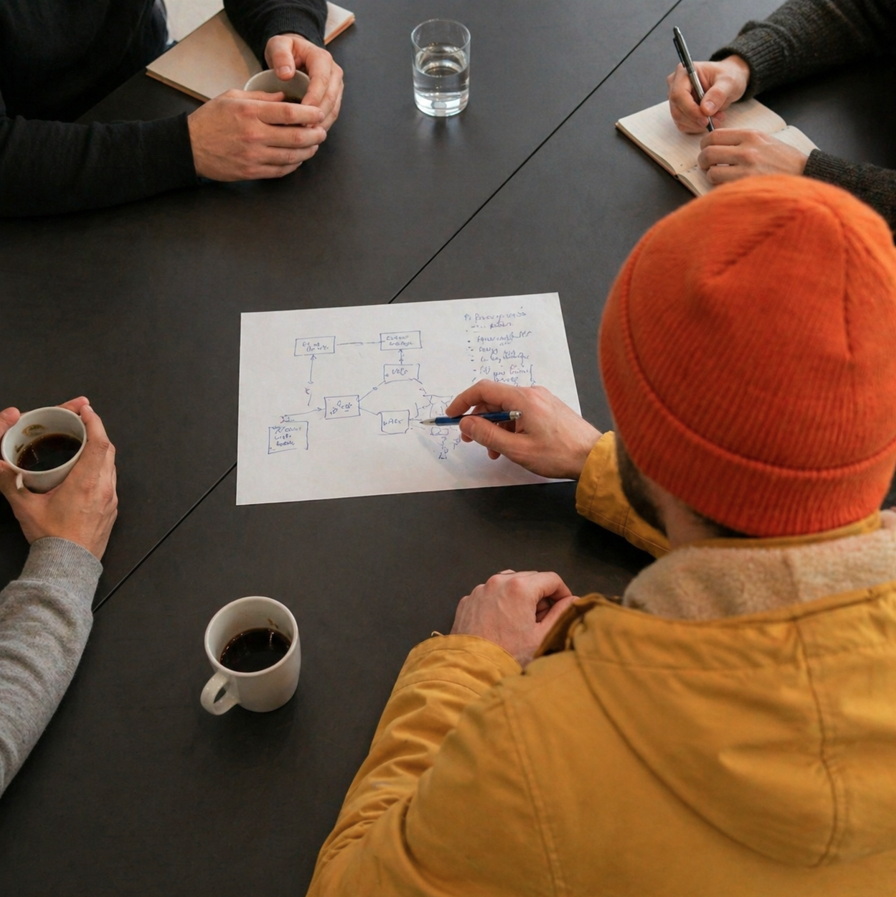
Couple of weeks ago, our CEO called a meeting that ran 70 minutes.
He had a sheet of paper and a pen. He was explaining how we could help a client achieve their strategic goals more effectively. The energy was high. The vision was clear.
I asked a question I knew would slow the room down.
"Before we commit to building this out, do we have confirmation from their side about what they actually want us to handle? I've heard mixed signals."
He paused. Then said something I've heard before.
"This shouldn't stop us from working on the plan. If we wait for every answer, we'll miss the window to help them get the value they need."
The room nodded.
And in that moment, I felt it: the team was about to receive tasks, and the foundation data still wasn't confirmed.
Here's what I was trying to protect.
If the hypothesis turned out incomplete, the cost wouldn't land on the vision. It would land on the people building proposals, mapping workflows, preparing presentations based on assumptions no one from the client's side had validated yet.
But the room had already moved past that concern.
Not because the data had arrived.
Because the idea had been presented with enough energy and conviction that it felt ready.
This past Sunday, he ran three hours in preparation for Riga Marathon. He's run over thirty marathons. This time, he approached the three-hour mark for the first time.
When someone like that says "we can do this," people believe him. Not because he's reckless. Because he's been right before.
He qualifies opportunities well. His judgment is strong. His win rate is high.
Which makes what happened next even more interesting.
I realized something I hadn't named before.
The same idea can enter a room twice and get completely different responses.
First time: rough, unpolished, gaps visible. Room says "not ready yet."
Second time: same substance, but presented with energy, conviction, clear vision of impact. Room says "let's move."
Nothing about the idea's foundation changed.
What changed was the makeup.
And once the makeup is applied well, the room stops asking certain questions.
This isn't manipulation. It's not even dishonest.
It's behavioral.
Strong presentation doesn't lie about an idea's readiness. It changes how people evaluate whether they have enough to act.
And when that presentation comes from someone with a proven track record, the effect compounds.
The room starts responding not to what's known, but to who's saying it and how confidently it's being said.
I've seen this pattern before.
A colleague presents a rough idea in a stand-up. People ask ten clarifying questions before agreeing to explore it.
The same colleague refines the presentation, adds a visual, frames the impact clearly. Same idea. Fewer questions. Faster agreement.
AI does this constantly. It takes an average thought and makes it sound finished. Structured. Confident. Polished.
And people start treating polished as ready.
Here's where it gets expensive.
When a team commits hours to an idea before the foundation is stable, they'll deliver what was asked. They'll work weekends if needed. They'll build something professional.
And if the hypothesis was incomplete, they'll rebuild.
The cost doesn't show up in the meeting. It shows up later, in the people executing on incomplete ground.
I wasn't trying to kill the idea in that meeting.
I was trying to separate the makeup from the substance.
Not because the CEO was wrong. He wasn't. His instincts are usually right.
But because the room's behavior had shifted. They stopped requiring the same level of confirmation they would have asked for if the idea had been presented differently.
After the meeting ended, I kept thinking about it.
The room didn't nod because the data was complete.
The room nodded because the presentation was strong and the person presenting had earned their trust.
Both things can be true: the idea might be good and the foundation might still need verification.
But once the makeup is applied, it becomes harder to see which is which.
This is the pattern I couldn't unsee.
Proven achievers earn the right to be believed. They should.
Strong presentation helps good ideas get traction. It should.
But systems still need someone asking: are we responding to the idea's readiness, or to how ready it looks?
Not to block. To protect.
Because hours are real. And once a team is loaded with tasks, the cost of an incomplete foundation doesn't disappear.
It just moves to the people building on it.