The Mixed Layer
Why the Borderline Case Is the Useful One
The cases that resist classification are not the ones to exclude. They are the ones that show where the line actually is.
It was a weekend morning. I was at home, remote in hand, looking for football.
I went through the sports channels. Boxing: two people hitting each other, rules, sweat, a winner emerging. Races: machines pushing against the limit of speed. Volleyball: a team under pressure, one error and the point is gone.
All expected. All recognizable. All sport.
Then I stopped.
On a sports channel, there was a girl standing with a ball on her shoulder. A pose. A dress. Makeup.
My first thought was: why is this here?
Sport, in my head, was effort visible from the outside. Muscles. Collision. Sweat. Something almost aggressive in its directness. What I saw on the screen was elegant. Calm. Still. Beautiful.
For a moment, I almost expected to smell perfume instead of a gymnasium.
My category resisted.
Then she moved.
Precision. Concentration. The kind that comes from years, not weeks. Judges watching. A mistake would cost something: not just aesthetically, but numerically.
Five to ten seconds. Something settled inside me. I understood where this belonged. I moved on and kept looking for football.
That small moment stayed with me. Not because the answer was surprising. But because of what the question revealed.
I had rejected artistic gymnastics before seeing any evidence. Not because I had a clear definition of sport. But because it did not match my image of what sport looks like.
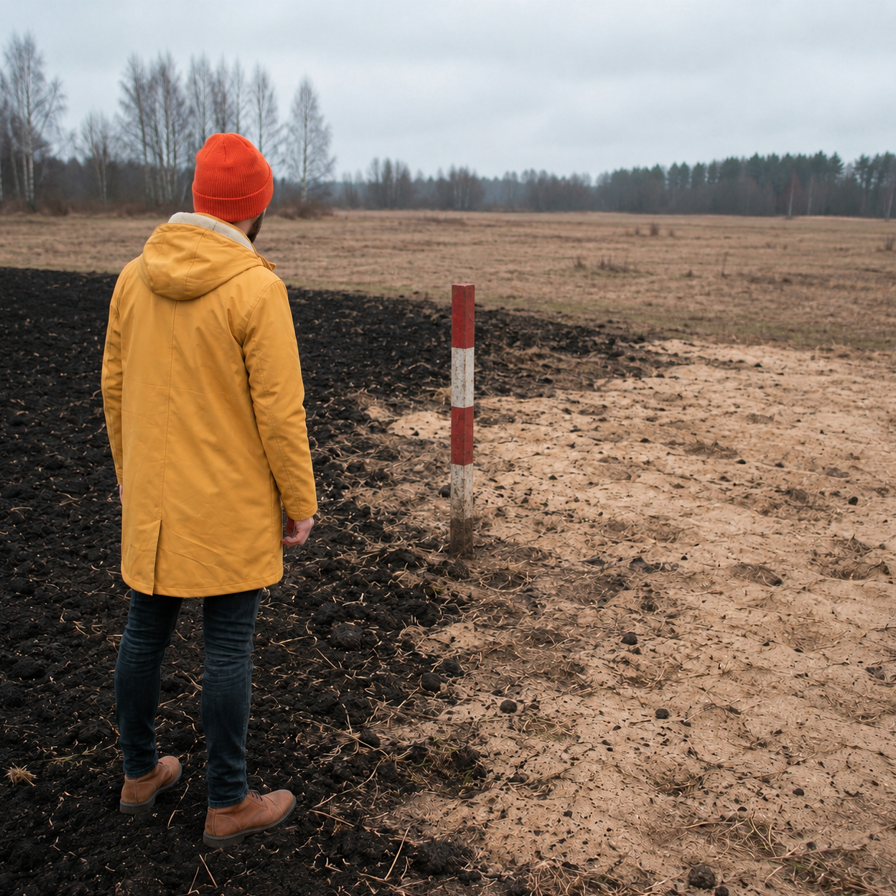
When I dig in the garden, the soil does not end with a clean line. Dark fertile topsoil does not stop where sand begins. There is a layer in between: a mixed zone where some of both exist, and where neither belongs cleanly to one side.
That layer is exactly where you can see what dark fertile topsoil is and what sand is.
I recalled a photograph of a river estuary. The place where fresh water meets salt water. The boundary was visible. Not a line. A zone. Two colors of water, present at the same time, gradually becoming each other.
The boundary shows itself at the transition. Not at the clean examples on either side.
Football is clearly sport. Nobody debates it. But football does not tell you much about what sport actually is. It just confirms what you already assumed.
Artistic gymnastics is uncomfortable to place. It has the surface of dance and the mechanics of sport. Because it sits at the edge, it forces a question that the clear examples never had to ask.
The surface said: dance. The mechanics said: sport. Preparation. Discipline. Risk of error. A judge. A moment when the body is tested under pressure, and the score does not care about the beauty that preceded it.
The borderline case does not confuse the category. It reveals what the category was made of.
Clear examples ask nothing. They confirm what we already assumed and require no adjustment.
The uncomfortable case, the one that resists the label, is the one that shows where the label actually comes from.
That is not a flaw in the case. That is the most useful thing about it.